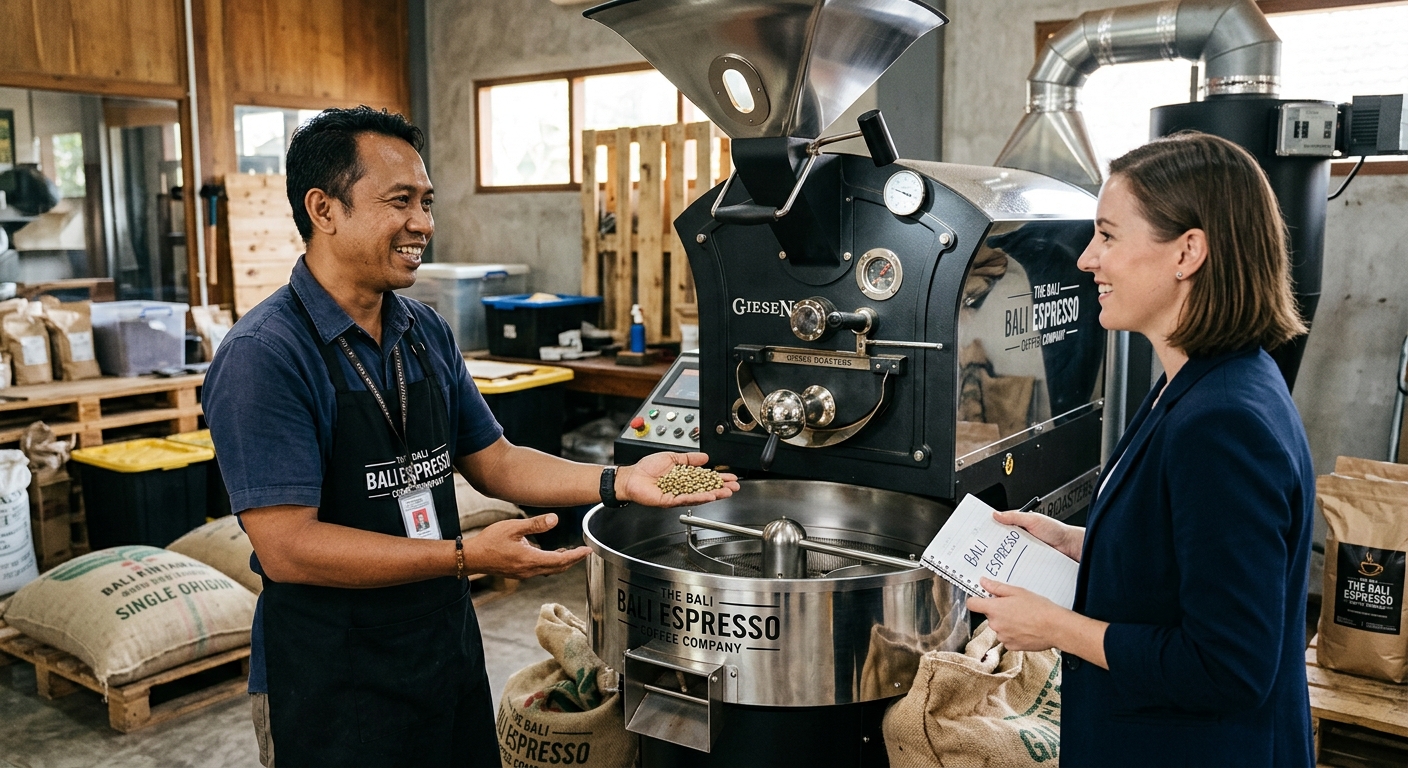
The fastest way to lose the plot in coffee is to buy everything off a spreadsheet. Origins become abstractions, and the family who actually grew the coffee becomes a line item. Twice a year we run the whole thing in reverse: we leave the Wynwood roastery and fly to the highlands of Bali to stand in the rows where Kintamani Cloud begins.
At 1,500 meters the air is thin and the mornings are cold, which is exactly what you want. Coffee cherries that ripen slowly at altitude develop denser, more complex sugars — the raw material for the brightness and clarity that survive all the way into your cup. You can't fake that with a clever roast. It has to be in the bean when it's picked.
Direct trade, for us, isn't a marketing sticker — it's a set of relationships. We buy from a cluster of 12 family farms and a washing station that's been processing coffee for three generations. We pay above the commodity price, we pay it quickly, and we pay it in a way a farmer can actually plan a season around. Fair, fast credit isn't charity; it's what keeps the best cherry coming to us instead of to whoever shows up first with a truck.
This trip we spent two days at the washing station watching fermentation and the raised-bed drying. Tiny decisions there — how long the coffee ferments, how evenly it's turned on the beds — decide whether a lot cups clean or muddy months later in Miami. Being in the room means we can ask for the processing we want instead of accepting whatever the export container happens to hold.
We came home with the season's Kintamani committed and two experimental micro-lots we're cupping for a limited release. The distance between a volcano in Bali and an espresso bar in Wynwood is about nine thousand miles and, right now, roughly six weeks. Keeping that line honest is the whole job — and it starts with actually walking it.
